Back
Back

Join the Free CSPA Community!
Join the Free CSPA Community! Connect with Aspiring CRNAs, Nurse Anesthesia Residents, practicing CRNAs, and CRNA Program Faculty Mentors who are ready to support you. Get real answers and expert guidance in a welcoming space that’s free from misinformation and negativity. You don’t have to do this alone! Join Now: https://www.cspaedu.com/community

Want Guaranteed CRNA School Admission? Learn More about the CSPA Money Back Guarantee here: https://community.crnaschoolprepacademy.com/6-12-month-intensive
Get access to application & interview preparation resources plus ICU Educational Workshops that have helped thousands of nurses accelerate their CRNA success. Become a member of CRNA School Prep Academy: https://community.crnaschoolprepacademy.com/join-cspa
—
Watch the episode here
Listen to the podcast here
CRNA School Acceptance with a 3.0 GPA- Jacob’s Story
Hey, future CRNA. Today’s episode is all about pulling back the curtain and letting you hear real nurses share their real stories. We’ve pulled together some clips from our free Q&A coaching sessions and in-person events so you can hear the questions nurses just like you are asking and the answers you didn’t even know you needed.
Whether it’s overcoming challenges, finding inspiration, or getting clarity on the CRNA journey, you’ll walk away feeling encouraged, informed, and ready to take the next step. Let’s get started.
—
Hello, and welcome. Jenny here, at NTI 2025 in New Orleans, LA. I have Jacob here. Welcome, Jacob. Jacob is an ICU nurse. And, Jacob, go ahead and share a little bit about your ICU background and where you currently work.
Hi there, thanks for having me. So I’m Jacob- I’m from the Midwest, around Kentucky area. I’ve been a nurse now six and a half years. I started when I was twenty years old with a two-year program; I started right in a level 1. I did burn trauma, but my burn unit became a mixed unit of, like, every specialty. So bone marrow transplant, MICU, SICU, neuro. Kind of got a good experience of it all. And then after that, COVID hit.
About 2021, I started travel nursing. I did a year at a hospital in parahealth. I did a year at an Indianapolis center level one. And now, I came back home. I work at a comprehensive center and do a little bit more neuro stuff and still general MICU, and also took on the weekend position. So I’m a nurse on the weekend and a dad on the weekdays.
Awesome. Well, thank you for sharing. So Jacob is gonna share a little bit more about how he tackled the challenge of starting as a brand new nurse in the ICU. So the first question I would have would be, what would you say would be the steepest learning curve you had in the ICU, and what helped you gain the confidence in your skills?
Building Confidence as a New Grad ICU Nurse
So for me, particularly, I went to burn. What sucked was I wasn’t a tech before I was a nurse. So I had to learn the ICU skills, the tech skills, and also the burn dressing skills, and it was a lot of information. I felt like I sucked.
But, we would get float nurses all the time, so I would do all the dressing changes. I would go in all the rooms. I never thought I was better than anybody. My techs, I would take so much information from my techs. I had some really experienced techs. They taught me more than some of the nurses, and I was able to really learn just the key positioning and details that made me really good.
I felt like I was fearful in the beginning of my burn unit days. But by the end, I was getting asked to take over patient care all the time, by doctors, to specifically do a sedation situation burn patient.
That’s amazing. I’ve got a response to share to that because what struck me is that you not only sought out experience by offering help to other nurses, but you also sought out people you knew to have more knowledge in that skill set even if they were, quote unquote “not a nurse”, you know…
Oh, I am not above anybody. My tech had more experience than an ICU nurse. That was the person I wanted to go to because they may not have the credential, but they knew what actually needed to be done.
I love it. That’s an amazing takeaway. Thank you. I would also love to know, what resources in terms of strategies helped you transition successfully into the ICU environment?
So resources that I used a lot, shout out Ninja Nerd. Ninja Nerd made a lot of things simple to understand. Also, on the the day shift side, I was a night shift nurse originally, but there were some day shift nurses that were older. Look for those nurses. They’re so rare.
CRNA School with 3.0 GPA: Even if I’m not precepting somebody, I’m still teaching my coworker something or I’m learning from them. Just by doing that back and forth, you’re constantly keeping your mind sharp on those practices and being able to talk about them.
When you get nurses that come back to your hospital and they have experience, interrogate them. Hospitals are not set in stone. You think, while you’re in nursing school, evidence based practice, everywhere does the same thing.
But it’s totally different everywhere, and that blew my mind because the way you do things, and if you’re being taught, may not be the best. So be receptive to anybody that has experience going into your area to learn something new.
That is really great advice. And, uniquely, even in the realm of anesthesia, what I love about working with students is because I pick up new things from them that they pick up from CRNAs they work with, that I don’t get to work with in my operating room. It’s a learning experience for me too. I love that.
Oh, yeah. You know, like, oral care. Like, some places I worked did a Q2 hours. Some places did a Q4 hours. Some people did breaks. Some places I worked at, you didn’t get a break at all. You ate at a nurse’s station. I had a 30 minute lunch in some areas, and I had an hour lunch before.
Wow. So it really lets you see, what do you like, what do you not like, and how are you going to adapt your own practice?
Now I’m bringing all the information back to my hospital. I’m now in my home hospital to hopefully combine and, like, mesh it all into, like, a good gumbo, good practice. Right?
Good Gumbo. I love it. Yeah. New Orleans? Of course. Alright. So the last question I have here, ICU related is, how do you continue to grow and stay resilient in the fast paced high pressure ICU setting?
Learning in the ICU as a New Grad
So to continue to grow, I’m still looking at new things. I’m still teaching. I think teaching is the best way to stay up to date. When I started travel nursing, I didn’t take as many nursing orientees. And I felt like I knew I was doing best practice, but sometimes I couldn’t get the verbiage. Like, I couldn’t pop out the patho.
When I came back to my home hospital, I really hit hard on precepting everybody. And even if I’m not precepting somebody, I’m still teaching my coworker something or I’m learning from them. Just by doing that back and forth, you’re constantly keeping your mind sharp on those practices and being able to talk about them.
As far as being resilient, I’ll be honest with you. It’s a hard job. I had really severe PTSD from my burn days and then being able to say- it’s okay to say that you have a problem. I went to a psychiatrist because I was like, “I can’t remember my numbers, like, to do all my eyes and nose and stuff. It’s like I have ADHD. I need help with that.” And the doctor said “I do help with that, but you have PTSD, and that’s the issue that you’re having.”
So I actually did PTSD therapy. I have taken therapy with the therapist that took care of first responders, nurses, doctors that understood it a little bit more. And, I did EMDR. I did nine months of that for, like, two times a week; I can sleep at night now. It really gave me the tools to keep going and also be strong.
It’s amazing. Key takeaways- teaching is a great way of learning. And seek out support. Don’t be afraid to ask for help. Get professional guidance.
Yeah.
Love it. And then to kinda wrap this up, tell me about how you would handle, a difficult colleague or coworker, maybe a situation where you’re having a disagreement or miscommunication. How would you handle something like that?
I think the big thing is choosing the right time for it is one thing. If you can, if it’s in the moment you can’t, you got embarrassed, then that’s okay. If it’s safety? Safety is the number one thing.
But try to have a conversation where you’re on an equal playing field and you’re not having a bunch of other people watching. It should be mediated, but you don’t want other people in the business. And if you can keep that secret, you know that you can have a conversation and it stays confident between that person, you get that trust, and then you don’t have the potential to have it happen again much later on.
Wow. That was a very highly emotional intelligent response. I just wanna kudos to you on that. And that’s a CRNA interview question. So you rocked it. You really nailed it. High five. A lot of growth mindset.
Before we finish, let’s talk about your low GPA. We’re going to actually take some time to talk about how Jacob got into CRNA school. Congratulations!
Yeah. Thank you.
CRNA School With 3.0 GPA- Can It Be Done?
I’d love to share what you thought your biggest struggle was with getting into CRNA school.
Yeah. So hands down, my GPA.
When I did my NursingCAS GPA, looking at it, 3.0 on the dot. I had a really hard undergrad. I started nursing school when I was eighteen. I had a kid when I was nineteen. Three people died. My aunt died in home hospice after six weeks. I spent time taking care of her. I worked.
My school flooded. It was underwater, so I didn’t even go to my school for, like, a third of my time. A lot of my friends actually dropped back, and it was a rapid-paced school. I never had more than a week off. So, like, for me, March 9th, my daughter was born. March 10th, my aunt died, and I was back in school March 12th.
And it all really affected my GPA. I found out that when you finish everything else up, you can’t really retake maternity and peds, can’t retake foundations.
I used to research all this CRNA stuff on Reddit, and it was terrible. I was like “I have a really low GPA.” People are telling me, don’t even try to apply. Well, I said, screw that. I’m just going to do some other things.
So I looked and I saw what the requirements were for CRNA schools, and I tripled it. So if I needed twenty hours of shadowing, I got sixty hours. I also made connections. One thing I noticed is that people talk a lot about casting a wide net. But what I really wanted to do, I poured heavily into one school.
I did get rejected twice from two schools, didn’t get interviewed or anything. But the school that I did get into, I went to two of their open houses. I shadowed with some of their SRNAs, and I met up with friends that got into the school. So I was shocked that I got an interview for that program because I was still just so worried about the GPA aspect of it.
But by the time I showed up there, the front desk person knew my name already. They already knew who I was. I also took every opportunity to shadow and talk to people and treated it as a mini interview. Like let’s say, I’m studying clinical questions, I would be seeing if my brain processing, if how I’m thinking through things is on the right track.
But it was just that GPA, and it took me some time. I knew I wanted to become a CRNA four and a half years ago after taking care of a kid on my burn unit that really affected me. And my wife sat down with me about a year and a half ago, and she’s like, “I think we’re in a good spot now that you could go back to this.” I was like, “I’m gonna be I’m gonna be really busy.”
So I had to, like, take H and A credits to finish my BSN and then start all the NursingCAS application, which, by the way, start early. NursingCAS sucks. It is a lot to do. And, yeah, from there, I just kept on just working at it.
Did you take any any extra courses or anything like that?
Yeah. So I did take one extra course, but I wasn’t even finished with it when I applied to the school I got into however I emailed them. So one thing with NursingCAS is, NursingCAS won’t let you have, like, 3 letters of reference. Or, shadowing hours.
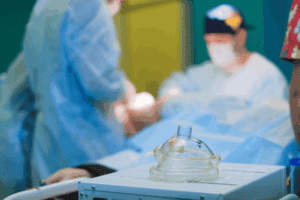
CRNA School with 3.0 GPA: I looked and I saw what the requirements were for CRNA schools, and I tripled it. So if I needed twenty hours of shadowing, I got sixty hours.
So I just emailed my school. These are my extra shadowing hours I have. These are other people that are really rooting for me to get in, and here’s their letters of reference. And, also, here’s my grade for my class right now. So I kept them up to date of what I was doing on top of my application.
CRNA Mentorship and Interview Prep Support
Oh, nice. Yeah. Awesome. Well, thank you for sharing, and I would love to hear your experience with CSPA.
So your five day interview challenge, fantastic. Absolutely love it. As well as using a TeachRN, hundred percent using mock interviews because they put stuff into perspective you wouldn’t even think about. Like, for me, I took some of the questions for, emotional intelligence is, like, I was precepting.
So one thing was walking the patient’s room, you hear the ventilator going off or whatever. What’s the person going to do? I said, “I’m gonna sound the alarm because I’m a nursing student or young and to think out what’s going on and not get that scary, oh, gosh. Everything’s going off. What’s going to happen?”
But in the anesthesia world, that never stops. That’s cues that you use to know what’s going on with the operation and your patient, which I never thought about. It made it look like I could have been anxious about that. So that mock interview really helped me put things in perspective.
I would constantly say, instead of listening to music, just stop. Start listening to Academy lectures. You’ll find little, like, tidbits of this, little pearls of wisdom in each lecture, even if, like, you reheard it from the past, that really helps this change in perspective, and do extra things.
Watchful Care, you know, nurse anesthesia history. That was one thing I learned that really helped on the politics side because if you’re bedside at ICU, there is no politics to it. There’s a massive difference in practice when it comes to anesthesia versus the ICU.
And the more you can get exposed to people that are working in it or using CSPA, the more you can be prepared for when you have interviews, or knowing that you really want this. This is what you want to do.
Awesome. I love that. What would you say to someone who’s on the fence about joining CSPA?
I’ll be honest with you. I view CRNA School as an investment, I used multiple different companies. I spent a lot of money. And to save yourself some money, CSPA gives you the most diverse resources and it keeps you connected, it’s an easy way to stay connected.
You know, questions of the day every day, just for the fact of you simply looking at the email or responding to that answer, it gets you looking at that and getting your eyes on resources.
CSPA does have the ability to use AI tools also, which helps a lot. Key tip- also ask your instructors or your board about AI. They love talking about AI stuff right now. They’re big into it.
But CSPA has such a diverse range of resources, and I’ve stayed up to date. Like, I was looking at an old website or things out there online that were just falling behind. They weren’t as updated as CSPA.
Well, thank you. I appreciate you, Jacob, and thank you so much for sharing your wisdom with everyone, and so, so excited for your future.
All the posts you see in the community, like, I have a 3.65 or I have a 3.8 GPA, you’re okay. I got 3.0, and I still made it.
Exactly. Amen to that.
Yeah. Thank you. Thank you for having me.
—
Thanks so much for tuning in! I hope Jacob’s story gave you encouragement and practical insight into what it really takes to grow as a new ICU nurse, push past the challenge of a low GPA, and stay resilient on the path to CRNA school.
Want more CRNA insights? Sign up for my FREE LIVE Webinar “Stand Out & Get In” to learn everything you need to know about getting into CRNA school.
Stay strong. We’re rooting for you, future CRNA!
Related Topics to Explore:
- What’s the Best ICU for CRNA?
- What are the Eastiest CRNA Schools to Get Into?
- CRNA School With a Low GPA- Last 60 Credit Hour Programs
- CRNA School Costs: A Comprehensive Guide to Paying for CRNA School
- On-the-Spot CRNA School Acceptance- Brice’s Story
- How Bailey Turned 7 Rejections into Multiple CRNA Acceptances
Important Links
Join the Free CSPA Community! Connect with Aspiring CRNAs, Nurse Anesthesia Residents, practicing CRNAs, and CRNA Program Faculty Mentors who are ready to support you. Get real answers and expert guidance in a welcoming space that’s free from misinformation and negativity. You don’t have to do this alone! Join Now: https://www.cspaedu.com/community
Get access to application & interview preparation resources plus ICU Educational Workshops that have helped thousands of nurses accelerate their CRNA success. Become a member of CRNA School Prep Academy: https://community.crnaschoolprepacademy.com/join-cspa
Want Guaranteed CRNA School Admission? Learn More about the CSPA Money Back Guarantee here: https://community.crnaschoolprepacademy.com/6-12-month-intensive
Get CRNA School insights sent straight to your inbox! Sign up for the CSPA email newsletter: https://community.crnaschoolprepacademy.com/email-sign-up
Book a mock interview, resume or personal statement critique, transcript review and more: www.teachrn.com