Back
Back

Join the Free CSPA Community!
Join the Free CSPA Community! Connect with Aspiring CRNAs, Nurse Anesthesia Residents, practicing CRNAs, and CRNA Program Faculty Mentors who are ready to support you. Get real answers and expert guidance in a welcoming space that’s free from misinformation and negativity. You don’t have to do this alone! Join Now: https://www.cspaedu.com/community

Join Us for Gassed Up: Fired Up for CRNA School The CSPA 2026 Conference
June 12th – 14th at the University of Louisville, KY
Ticket and Agenda Information: https://events.crnaschoolprepacademy.com/
Want Guaranteed CRNA School Admission? Learn More about the CSPA Money Back Guarantee here: https://community.crnaschoolprepacademy.com/6-12-month-intensive
Get access to application & interview preparation resources plus ICU Educational Workshops that have helped thousands of nurses accelerate their CRNA success. Become a member of CRNA School Prep Academy: https://community.crnaschoolprepacademy.com/join-cspa
—
Watch the episode here
Listen to the podcast here
Should I Retake Classes to Meet CRNA School GPA Requirements?
Hey, future CRNA. Today’s episode is all about pulling back the curtain and letting you hear real nurses share their real stories. We’ve pulled together some clips from our free Q&A coaching sessions and in-person events so you can hear the questions nurses just like you are asking and the answers you didn’t even know you needed.
Whether it’s overcoming challenges, finding inspiration, or getting clarity on the CRNA journey, you’ll walk away feeling encouraged, informed, and ready to take the next step. Let’s get started.
—
I get my BSN in December. I have my ADN, I got that last year, so I’ve been working in the surgical ICU for the past year now. But when I was taking my prerequisites, I got a C in microbiology. So right now my overall science GPA is a 3.0, and I was looking to increase it.
I did reach out to some program directors and some said to take advanced level, graduate level science courses, and others were saying that they would recommend to just take other classes to improve my GPA and get involved. So I wanted to know, is there any advice on what to do if you do have a struggling GPA, for those core science classes? And then also, where would be a good place to take the graduate level courses online?
Yeah, okay, cool. So let me grab a resource real quick while I’m thinking about it. I’ll just kind of put some of the info from it in the chatbox here. This just giving you an overarching idea of where some CSPA members have been successful taking courses to kind of combat a lower GPA.
Dear Online Reader- I’m so sorry I can’t link to this course list here! It is available for CSPA students inside the CSPA Resources section of The Academy. If you’re not a CSPA student yet, please join our free community to ask questions and get recommendations about the best places to take and retake courses for CRNA school. Thanks for your understanding!
As far as having a C in microbiology, out of all the science courses, that’s actually the one that’s typically the least relevant towards the CRNA curriculum. So while some programs may tell you they want all your core sciences to be a B or better, and they may have you retake a course like microbiology, the vast majority would prefer you to spend your time doing sciences that would actually matter such as chemistry, physics, advanced pathophysiology, advanced pharmacology, advanced health assessment, things like that.
I would err on the side of caution, if you’ve already talked to the programs you’re interested in and that’s what they were kind of pushing you towards. If not, I would consider some advanced sciences. As far as which advanced sciences, I think that’s kind of up to you.
I think kind of the way to go is look at what your other undergrad science grades are. Were there any areas that maybe you got a B in those courses, like an advanced pathophysiology course, for example, or anatomy pathophysiology, maybe you had a B in that. So maybe you have an opportunity to get an A in an advanced pathophysiology course to show them the growth.
Same thing with chemistry, maybe you have, you know, gen chem and maybe you got a B in that, but maybe now is your opportunity to take biochemistry or O chem and get an A to again, show the CRNA admissions panel the growth.
Which Classes Matter Most for CRNA School GPA?
I would look for a course that you have room to grow. Meaning if you’ve an A in anatomy, pathophysiology in undergrad, you probably should take a course that maybe you got a B in. That way you can get an A and show them the growth versus taking a course you already had an A in and taking it again and getting the A again. Does that make sense?
Yeah, that makes sense. And it’s something I’m looking into. It’s also a little overwhelming because like some of the schools said that they wouldn’t even calculate me taking graduate level courses into my science GPA. So then it’s like, I don’t want to have to invest so much time and money into doing these advanced level courses if some of the schools wouldn’t even accept it.
I don’t know how flexible you are with what schools you apply to. Some schools don’t have any, I don’t know if I would call it forgiveness per se, but they look at what you originally got and that is your core science GPA and there’s really no wiggle room to really like impact it.
However, it does still make an impact to take graduate level courses and get an A. It does help overcome some of their hesitations around giving you a chance to interview and gain acceptance. So either way, it still helps, but there are plenty of schools who will count those graduate level courses into your core science GPA, which would give you a much better odds of being competitive for that particular program.
So it might just be a matter of, if you’re considering several schools, maybe making your top priority schools the ones who are a little more lenient and able to work with you. That that would be my recommendation, is to try to tailor your application process to schools who will work with you, especially if you’re going to be spending the time and money to take these courses, you want to have it actually count towards boosting your GPA.
But know that, even if you only have a handful of schools you’re applying to, you’re not willing to move or unable to relocate for school, just know that even if you were to take the time and energy to put into that course, it will help you overall. I do think it will help you even more so if you can find schools who are willing to kind of boost your GPA with it.
Pharmacology and Emotional Intelligence for CRNA School
One more thing I do want to ask is for interview preparation, I just wanted to know how do you guys at CSPA support interview questions? Because I know they can ask you interview questions about things like medications down to the cellular level, which isn’t really what we think about every day in the ICU.
So is that something that we kind of get into in The Academy to make sure that we’re prepared to answer those kinds of questions?
Yes, that is definitely something that CSPA has. Dr. Ballester has done the majority of our pharmacology courses and she was Assistant Program Director at MUSC for well over a decade and she loves pharmacology. She’s really, really good at teaching it.
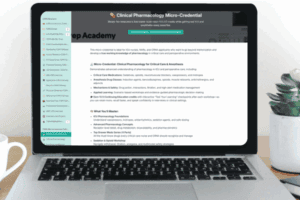
CRNA GPA Requirements: CSPA is designed to be an educational platform in addition to application and interview prep; our interview prep is education. It is critical care knowledge.
So she’s taught a lot of our pharmacology. I also have some pharmacology courses in there along with Dr. Wilson, who is also a seasoned faculty member- he has taught at USC for several years, for over a decade. So there are a lot of pharmacology courses inside The Academy to help prepare you to kind of have better, I should say, baseline understanding of what they would expect you to know in the interview.
But a lot of CSPA, even though we go over resumes and personal statements, and we do also coach on emotional intelligence and what I call kind of soft skills because believe it or not, that really moves the needle almost more so sometimes than clinical knowledge because programs will say, “Well, I can teach you pharmacology and pathophysiology, but it’s harder for me to teach EI and kind of more softer communication skills”.
They like to see students come in strong in that area, so we do a lot around that. But that being said, CSPA is kind designed to be an educational platform in addition to application and interview prep. So kind of think of it as our interview prep is education. It is critical care knowledge.
That is essentially how we gear you up for the interview, but we also then have extensive mock interview library that you can review actual interview questions and kind of assess how people answer them, how you would answer them. Also in our weekly coaching that a lot of our seasoned CRNA faculty do now, you can ask for EI question and on the spot, they can ask you a question and give you feedback, same with clinical questions.
So there are opportunities to kind of gauge if you’re struggling with a specific type of topic, put yourself in a hot seat on one of the coaching calls and we’re happy to do stuff like that too.
Okay, thank you so much.
Yeah, you’re very welcome. All right, and I don’t know whose hand up was up first, but Anthony, now I see you on here.
Hello. Hi. So I just finished my first year as an RN. I was in the emergency department. During that time, I got my TCRN. And I’m just transitioning now after doing my year into a CTICU. High acuity. It has heart transplants, lung transplants, impellas, intra aortic balloon pumps, all that, swans. So I’ll get good experience in a high acuity ICU, I definitely think. But my question was very similar to Jasmine’s.
How Do I Know What to Prioritize First?
I took anatomy and physiology. It was my B minus. So that I definitely have to retake. I’ll also have to retake stats because it has to be within five years for the programs I’m looking at.
My science GPA is a 3.5; I was wondering on a broader scale, those are two classes I definitely have to retake, but could I boost my science GPA even more by retaking some other classes to get it higher than a 3.5?
For example, A&P 2, I got a B+ in. Should I prioritize that? Or things like, because I have to get my CCRN as well, but, like, CMC and CSC? Those certifications? I guess, throughout the entire application process, how do I prioritize what I should really focus on, because I know I have to retake certain classes.
I know I have to do those retakes, and that’ll take time and energy to do that. So should I prioritize getting a certification over retaking my A&P 2, or should I focus on research and involvement? I plan on doing a mix of all of them, but how would you like set what is your prioritization?
That’s good, really good. You’re not alone in wondering what to prioritize, what makes more impact. I don’t know if you’ve reached out to the programs that have that “B or better requirement” for a course like A&P; you’ve done A&P 1, A&P 2, you’re asking since you technically didn’t meet that B requirement to retake A&P 1.
You may be better served, instead of retaking an undergrad A&P 1, to take a graduate level A&P course, and that would more than fulfill their requirement of A&P 1. So that could be something you could look into. I would specifically ask them, instead of retaking an undergrad A&P 1 course, could I take a graduate level A&P course to make up for this B minus I have in this prerequisite course. I would start there with that.
The same with stats, you can take a grad stats. Not all of them require grad stats, but it’s again going to boost your GPA more and show them that you can handle a graduate level course. There are actually a lot of CRNA programs who require graduate statistics over undergrad statistics. So something else you can consider in lines with needing to have that requirement.
Meeting CRNA GPA Requirements
Now, if they only require an undergrad stats to be within five years and you take an advanced A&P course, then I would stop there. Meaning I don’t think you need to take two grad level courses. If you had a lower GPA, I probably would recommend two graduate level courses to get your GPA up there more because it’s going to be weighted heavier, but sounds like you have a lot already on your plate between needing to take those two courses.
So I would aim to take an advanced A&P course along with meeting that statistic requirement, even if it’s undergrad level, to be within five years. That in itself, if you got two As in those two courses, you would have, you know, probably above or close to 3.6 at that point, which would be pretty competitive.
And as far as other certifications, you already have your TCRN. So I personally would focus on your CCRN and then call it quits there. I don’t think there’s necessarily a need for you to get additional certifications. You would be better off, if you had any additional time, to look for leadership roles on your unit, such as precepting or getting involved in a unit leadership committee role.
So those would be what I’d prioritize versus just another certification. If you already have your TCRN plus your CCRN, I think that’s plenty of certifications.
Alright. So you’re saying, some programs definitely do accept, a grad level A&P, and the B minus, they’ll be okay with?
Yes, but I would confirm that prior- don’t make that assumption, but more than likely, if you ask them, instead of retaking an undergrad A&P 1, would you count an advanced A&P course to make up for my B minus, to meet that B or better requirement, most of the time hands down, they’re going to say absolutely because that shows the rigor of a graduate level A&P course, which is exactly what you’re going to be, you know, expected to be able to do in CRNA school.
That would pull more weight for the majority of programs. So I would just confirm that with that specific school who has that requirement just to make sure.
Okay. And then I just have two more quick questions. So for retaking those classes, I asked them about Portage Learning. Does that look any better or worse compared to going through an online university?
Do CRNA Schools Accept Portage Learning?
Yeah, the two P’s- Phoenix and Portage are the two schools that some CRNA schools don’t feel strongly about. Unfortunately, some don’t care, some do. So it’s like, you have to kind of figure out, your CRNA program, how they view those particular programs, Phoenix and Portage. I would say 50/50.
I would say fifty percent of CRNA schools really don’t care, like take it where you can get it where it’s most affordable and it’s convenient, where you can take it online, cool. Other CRNA schools will flat out say, “We won’t consider courses taken at these schools, so don’t do it”.
Again, when you’re emailing a school, I would, in a very brief consolidated way, if you can use ChatGPT to help you get an email like really brief, to consolidate to the point, ask them about taking graduate level A&P course to replace the B minus in your A&P 1, and then ask them specifically about taking those courses either at Phoenix or Portage, or if they have a preference on where you would take it.
I provided a list here on the side of the chat window where a lot of CSPA students have taken courses. Now I’m sure Phoenix and Portage are on this list because a lot of them have taken them there, but most of the time students are successful in taking them at those colleges when they’ve confirmed that it’s approved by their desired CRNA programs.
Okay and then last question, so my overall GPA is at 3.81 and my science was the 3.5 currently, but that would go up if I got As in the grad level statistics and A&P. So, I mean, my overall being higher than my science, does that look “bad”, do they really evaluate that or are they two separate entities?
Overall GPA vs. Science GPA
They’re usually two separate entities. However, they care a lot more about science than overall, and don’t get me wrong, a 3.8 is an incredibly strong overall GPA so they definitely will look at that and think that’s a great GPA. But that being said, I guess it’s like one of those situations where if you have a lower overall GPA, but a really strong science, you’re more likely to still not face that barrier of rejection versus the opposite.
Meaning if you have a high overall but a low science, then they’re like viewing that more “negatively’ because the curriculum in CRNA school is science. So they want to make sure your aptitude for science courses is high because you have to maintain a B or better or you risk dismissal from the program.
So in a lot of times, some schools are eighty percent benchmark, other schools, you have to maintain an eighty five or eighty six percent to not get removed from the program. So it’s pretty intense. So that’s why they have such a high standard for science GPA as far as if you’re closer to the 3.0 and they worry you wouldn’t be able to meet the requirement to maintain your GPA.
So I guess what I’m trying to paint a picture of is, you’re strong either way. So a 3.5, 3.8, you’re not likely going to have any issues getting an interview based on your GPA alone. Now meeting the requirements is still important, meaning having that statistics within five years and having a B or better in all your prerequisite courses, including A&P.
So because of those two things, you will have to retake those courses, but not because your GPA needs the help, but because it’s just a prerequisite requirement. It will strengthen you overall in the GPA realm, but given your strength already, I don’t think that that’s going to be a barrier for you as far as getting an interview.
Other things that could be barriers would be just your ICU experience being in the ER for a year. Now you’re at CTICU, which is great, but you’re still relatively new there. So in the big scheme of things, even though you have ER experience, they probably would start you off as kind of quote unquote a novice ICU experienced nurse, even though I know you can argue all day long about ER experience.
I think it’s great experience, but they would look at you like you just started in the ICU. So if you apply after a year in the CTICU, you’ve had a year of ICU, even though you’ve technically had two years of, you know, nursing under your belt. So that to me, I think the area that you’d have to focus heavily on is leadership roles and trying to get device trained while you’re in the CTICU to show your clinical strength there.
Okay.
And your GPA, like I said, I don’t think you need to lose sleep over your GPA.
Alright. Thank you so much.
Yeah, you’re welcome. And the last, just some word of advice too, obviously you’re retaking some courses. The last thing you want to do is overload your plate with doing the CCRN and all these other things. What if you risk getting, you know, a C in this advanced pathophysiology course or not getting the B or bettering your stats course that’s required?
So be careful with how much you put on your plate because you have a strong science GPA, but if you were to not do well in these courses that you have to take, that could be an unfortunately very negative deterrent. So just be really careful with how much you load up your plate.
Okay, definitely. Thank you so much. I appreciate it.
You’re welcome, Anthony. Who’s next? Hi there.
Can You Get Into CRNA School with a 2.8 GPA?
So I would like to frame this question along the lines of how to sell myself to get into an interview. I’m not really concerned with the ability to interview, that’s kind of where my strengths lie. But to paint a picture for you, I don’t want to spend a bunch of time trying to recover my GPA.

CRNA GPA Requirements: The Free AI-Powered GPA Calculator Tool from CRNA School Prep Academy will break down your Overall, Science, and Last 60 GPA.
After I get my BSN this December, I’ll be sitting at an undergraduate of 2.86 overall GPA. I’m just going to have to live with that. But science and the last sixty hours are 3.2.
I have got six years in the ER, did two years of travel nursing, and I’ve cross trained to the ICU. In the middle of cross training, I’ve gotten my CCRN, trained CRRT, Impella’s, doing balloon pumps next week, and heart recoveries. So I’m trying to do all of these extra things.
I’m in a unit based council with Float Pool. I’m in a nursing shared governance council with a subcommittee of evidence based practice. So as you can see, I’m trying to shore up by overcompensating in all these other areas for my undergraduate GPA of 2.86. It would take me 44 more credit hours of straight A’s just to get a 3.0.
It’s just not realistic. So what else can I do?
Have you narrowed down your school search? I think you’re going to need to lean into going to open houses and talking to programs that will give you time with them. Not all of them will, they just don’t have the capacity, but leaning into going to open houses is really going to be where I would push you.
Getting to know the program directors, meeting them at conferences, whether that’s at our upcoming conference, Gassed Up: Fired Up for CRNA School or there’s a conference called the ADCE, it’s in February of every year, so you have time to kind of plan for it. But it’s essentially an AANA conference just for CRNA faculty members.
That would be gold for you to go to. If you’re going to go to conferences at all, that would be where I would push you because you know, the Annual Congress is great, there’s so many CRNAs there, but really you want to talk to the faculty members, the ones who are decision makers about who they let in their programs and what matters to them, that kind of thing.
CRNA Conferences
So the ADCE conference, you can Google AANA ADCE, and you’ll find information about the upcoming conference for 2026. But I think with your situation, given the fact that you technically fall below the threshold to even apply based on your overall GPA, you’re going to have to really seek out schools who are willing to look at just your last sixty credit hours to consider your application.
So it is possible. It has happened, but you have to kind of be very specific on what schools you even apply to because not all of them will be, or not all of them are going to do that, but they are out there and I think once they get to know you and meet you, especially at conferences and open houses, you’re more likely to be able get some good feedback on a path forward or not.
I mean, most of them are pretty transparent. They’ll tell you if it’s just not the program that you should spend your time with. It’s just never gonna happen. But then you might have programs who do tell you, let’s talk, let’s see what we can do and see if there’s a way, you know, if we consider your last sixty credit hours where we can give you the chance to interview.
So I think that’d be where I would push you is trying to narrow down your CRNA school list to the ones who are willing to talk to you with that GPA and who will consider your last 60 credit hours for the chance to interview and be admitted.
Do you have any recent coursework though? I know you said your last six credit hours were 3.2, but when’s the last time you took a science course or anything like that?
Oh, it would probably be 2019. My first bachelor’s degree is all the way from 2007-2013.
Okay. So yeah. It’s been a long time ago. The other thing you can consider, I’m just trying to think of all the different things, is things like the GRE, right? A lot of times with a lower GPA, they like to see a strong GRE score. However, given that it’s been like six years since you’ve been in the academic arena, even if you were to take, I know you don’t want to take any courses, but this is so hard.
I know you don’t want to hear this, but the reality is when you have an area of weakness, that’s where you have to go. Like you have to go to the weakness, because no matter what kind of leadership roles you take or certifications you get, you have a giant hole and your hole is the academics. You’re not going to patch the hole with things that don’t fit in the hole.
It’s like trying to put a square peg in a round hole, it just won’t work. By taking a course, even if it’s just one, you’ll demonstrate academic proof. You’ll show you are capable of getting an A in a graduate level science course, show them they’ve got to give you a chance. And so the proof is in the pudding, is that what they say?
They want to see evidence that you are physically capable of getting an A in an advanced science course. I think even if you just did one course, I think you’ll see a dramatic difference as far as faculty actually giving you more time, because you are essentially addressing what your biggest weak point is, which is your GPA.
Yes, you’re not gonna get to a 3.0. Like forty four credits, no, that’s a lot. But if you even just took a five credit hour course, got an A in an advanced level science course, I think that’ll make a huge impact for your overall odds of getting an interview.
—
Thanks so much for tuning in as we talked about how to navigate GPA challenges, when to retake prerequisite classes, and whether graduate-level science courses can help strengthen your CRNA school application. I hope you have a clearer understanding of how admissions committees view your GPA, what really matters for your academic profile, and how to move forward strategically — even if your GPA isn’t perfect.
Remember, every nurse’s CRNA journey looks different. Stay focused on your growth, choose the steps that make sense for you, and keep going — your CRNA goal is still within reach. We’re cheering you on, future CRNA!
Want more CRNA insights? Sign up for a FREE LIVE Q&A Session “Stand Out & Get In” to learn everything you need to know about getting into CRNA school.
Related Topics to Explore:
- How to Find a CRNA to Shadow + Questions to Ask When Shadowing a CRNA
Learn how to find CRNA shadowing opportunities and make the most of them with thoughtful questions that impress admissions committees and deepen your understanding of anesthesia practice.
-
Discover CRNA programs that are more flexible with GPA, experience, or GRE requirements—plus what “easiest” really means when it comes to getting accepted into anesthesia school.
-
CRNA School With a Low GPA- Last 60 Credit Hour Programs
Explore CRNA schools that focus on your most recent academic performance and learn how your last 60 credit hours can help you overcome a lower cumulative GPA.
-
CRNA School Costs: A Comprehensive Guide to Paying for CRNA School
Understand the full cost of CRNA school—from tuition to living expenses—and get practical strategies to budget, save, and find financial aid to fund your nurse anesthesia education.
-
How to Become a CRNA Plus Salary Details and the Top 10 CRNA Schools
Step-by-step guidance on how to become a CRNA, including education requirements, average salary insights, and a breakdown of the top CRNA programs across the country.
Important Links
Join the Free CSPA Community! Connect with Aspiring CRNAs, Nurse Anesthesia Residents, practicing CRNAs, and CRNA Program Faculty Mentors who are ready to support you. Get real answers and expert guidance in a welcoming space that’s free from misinformation and negativity. You don’t have to do this alone! Join Now: https://www.cspaedu.com/community
Get access to application & interview preparation resources plus ICU Educational Workshops that have helped thousands of nurses accelerate their CRNA success. Become a member of CRNA School Prep Academy: https://community.crnaschoolprepacademy.com/join-cspa
Want Guaranteed CRNA School Admission? Learn More about the CSPA Money Back Guarantee here: https://community.crnaschoolprepacademy.com/6-12-month-intensive
Get CRNA School insights sent straight to your inbox! Sign up for the CSPA email newsletter: https://community.crnaschoolprepacademy.com/email-sign-up
Book a mock interview, resume or personal statement critique, transcript review and more: www.teachrn.com